Outlet Smoking or Sparking? Safety Steps & Repair Costs
Outlet smoking or sparking? Learn why it happens, what to do immediately, warning signs of hidden fire risk, and what electricians typically charge to fix it.
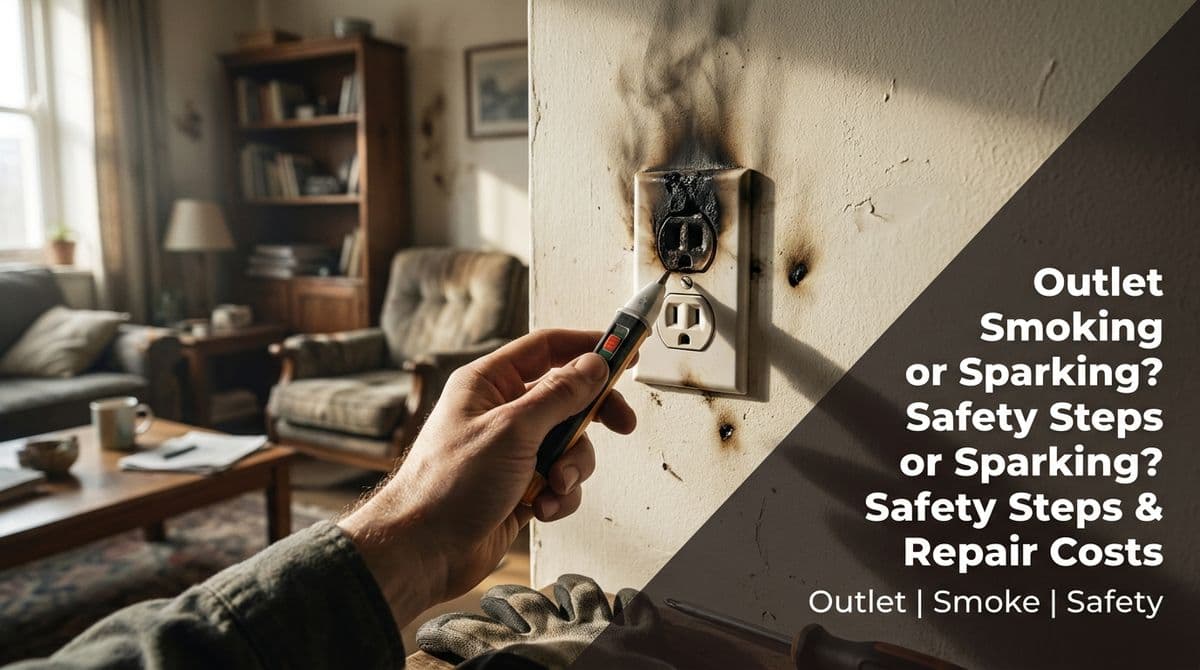
We Got a Call About a Smoking Outlet… Now What?
We recently got a call from a customer — let’s call him Brian — who had a scary moment in his bedroom. He plugged something into an outlet, saw smoke, yanked the cord out, and then did exactly what we always hope homeowners will do: he stopped using that outlet and called an electrician.
On the phone, Brian told us he’d gone online afterward and read horror stories about outlets starting fires inside the wall. He wasn’t sure if this was an emergency, what he should do in the moment, or what it might cost if it was “just a bad outlet” versus a bigger wiring issue.
We walked Brian through some safety steps right away and scheduled a visit. In this post, we’ll share the same guidance we gave him, so you know exactly what to do if you ever see an outlet smoking or sparking — and when it’s time to bring in a licensed electrician.
Why Do Outlets Smoke or Spark?
A tiny, brief spark when you plug something in (especially a device with a motor) isn’t always a crisis. But visible smoke, charring, or repeated sparking is a serious warning sign. Common causes include:
- Overheating: High demand on the circuit (space heaters, portable ACs, hairdryers) can push an outlet past its limit.
- Loose connections: Wires that aren’t tight inside the receptacle create resistance and heat, which can lead to smoking or melting plastic.
- Damaged receptacle: Old, cracked, or cheap outlets break down over time and can arc internally.
- Overloaded circuit: Too many devices on one circuit cause heat buildup in the outlet and wiring.
- Bad cords or plugs: Frayed cords, loose plugs, or damaged power strips can arc and burn at the outlet.
Brian’s situation sounded like a failing receptacle or loose connection — both of which can heat up not just the outlet, but the wiring inside the wall.
What To Do the Moment You See Smoke or Smell Burning
If you ever see an outlet smoke or spark, or you smell something burning around it, here’s what we tell homeowners to do immediately:
- Step back and stay calm. Don’t touch the outlet faceplate itself.
- If it’s safe, unplug the cord by the plug, not the wire.
If the cord or outlet looks like it’s actively burning, skip this step and go straight to shutting off power. - Turn off the breaker to that circuit.
Go to your electrical panel and flip the corresponding breaker fully to OFF. If you’re not sure which one it is, and it’s clearly a serious issue, turn off the main breaker. - Do not use the outlet again.
Put tape over it or a note so no one plugs anything in “just to test it.” - Call an electrician.
Even if the smoking stopped, the underlying problem is still there.
If you see flames that don’t immediately die out, treat it as a fire emergency:
- Use a Class C or multi-purpose (ABC) fire extinguisher if you can do so safely.
- Never throw water on an electrical fire.
- If the fire persists or spreads, get everyone out and call 911.
Hidden Warning Signs Inside the Wall
When we scheduled Brian, he mentioned something many people worry about: “What if it’s burning inside the wall, where I can’t see it?” That’s a valid concern. Here are warning signs we tell homeowners to watch for:
- Outlet face is hot to the touch (not just warm from a device’s power brick).
- Brown or black scorch marks on the outlet or wall plate.
- Melting or bubbling plastic around the receptacle.
- Persistent burning or fishy smell even when nothing is plugged in.
- Buzzing, crackling, or sizzling sounds from the outlet or wall.
- Lights flickering or breakers tripping on that circuit.
Any of these can indicate overheating or arcing behind the wall, not just at the outlet itself. That’s exactly why we treat smoking outlets as more than a “simple” cosmetic issue.
Why a Smoking or Sparking Outlet Is Not a DIY Fix
We totally understand the temptation to run to the hardware store, grab a $3 outlet, and swap it yourself. But with smoke or visible damage, here’s what worries us about DIY fixes:
- Hidden heat damage: The insulation on the wires inside the box may be brittle or melted.
- Loose or backstabbed connections: Many older outlets use push-in “backstab” connections that fail over time.
- Miswired neutrals and grounds: A simple mistake can leave metal parts energized.
- Code and safety issues: Bedrooms often need specific types of protection (like AFCI), depending on your local code.
When we open up a smoking outlet, we’re not just popping in a new device. We’re inspecting the wiring, checking for heat damage, tightening or re-terminating connections, and making sure the entire circuit is safe.
What We Typically Do (and What It Usually Costs)
On the phone, Brian asked us the same question most people ask: “If it’s just replacing the outlet, what does that usually run?” We gave him a ballpark so he could plan.
Basic Outlet Replacement
For a straightforward outlet swap — no wiring damage, just a bad receptacle — we usually charge a service call fee plus minimal material. In Brian’s case, that meant:
- Service call / diagnostic fee: around $85
- Outlet and cover plate: about $5 in materials
So a simple, safe replacement typically lands around $90 total in our market. Pricing can vary by area, type of outlet (standard vs. GFCI/AFCI), and the contractor, but this gives you a realistic starting point.
When It’s More Than “Just an Outlet”
If we open the box and find more serious issues, here’s what might be involved:
- Heat-damaged wiring: Cutting back and re-terminating wires, or replacing a short section of cable.
- Bad splices or overcrowded box: Correcting unsafe connections inside the box.
- Circuit problems: If multiple outlets or lights are affected, we may need to trace the circuit, test loads, and possibly run new wiring.
- Code upgrades: Installing GFCI/AFCI protection if the location requires it.
Costs for these situations can range from a bit more than a basic service call for minor repairs to several hundred dollars if we’re tracing and correcting larger wiring issues. We always explain what we find, show homeowners the damage, and provide options before moving forward.
When To Call an Electrician vs. When To Watch and Wait
We tell homeowners to call an electrician right away if:
- You see smoke, charring, or melting at an outlet.
- You smell burning plastic or a fishy odor around outlets or switches.
- An outlet is hot, buzzing, or crackling.
- A breaker keeps tripping on the same circuit.
If you just notice a plug that feels slightly warm or a power strip that seems overloaded, you can often start by unplugging devices, redistributing loads, and monitoring. But once there’s visible smoke or damage — like in Brian’s bedroom — that outlet is done until a pro inspects it.
Bottom Line: Don’t Ignore a Smoking or Sparking Outlet
Brian did exactly what we hope anyone would do: he unplugged the device, stopped using the outlet, turned his attention to the breaker panel, and called a licensed electrician. That quick action can be the difference between a minor repair and a serious house fire.
If you’ve had an outlet smoke, spark, or smell like it’s burning, don’t wait. Shut off the power to that circuit, keep everyone away from it, and have a professional take a look. Most of the time, it’s a manageable fix — and even when it’s more involved, it’s far cheaper than the cost of an electrical fire.