Burnt and Arcing Panel Found in Glendale - No Warning Signs
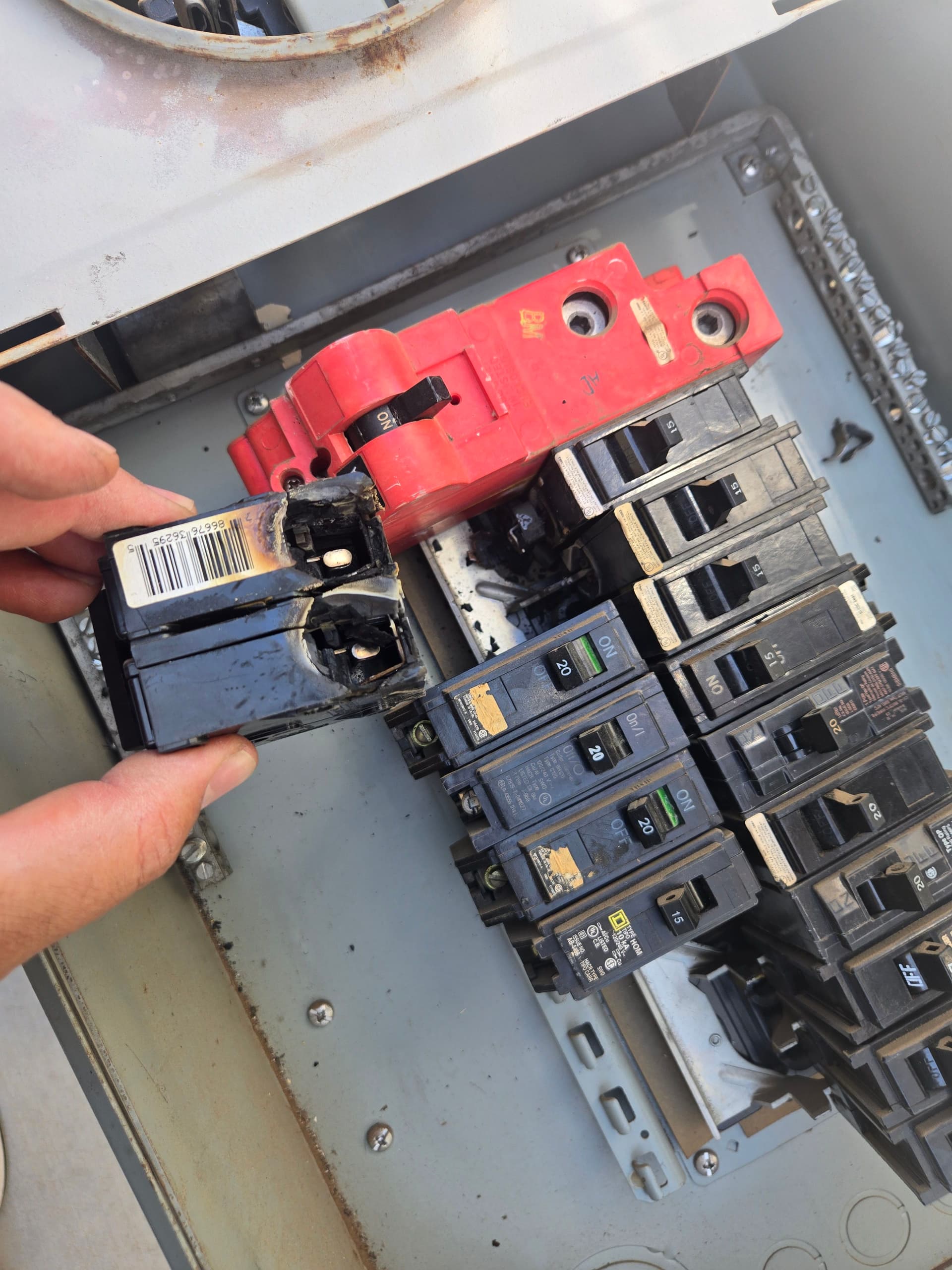
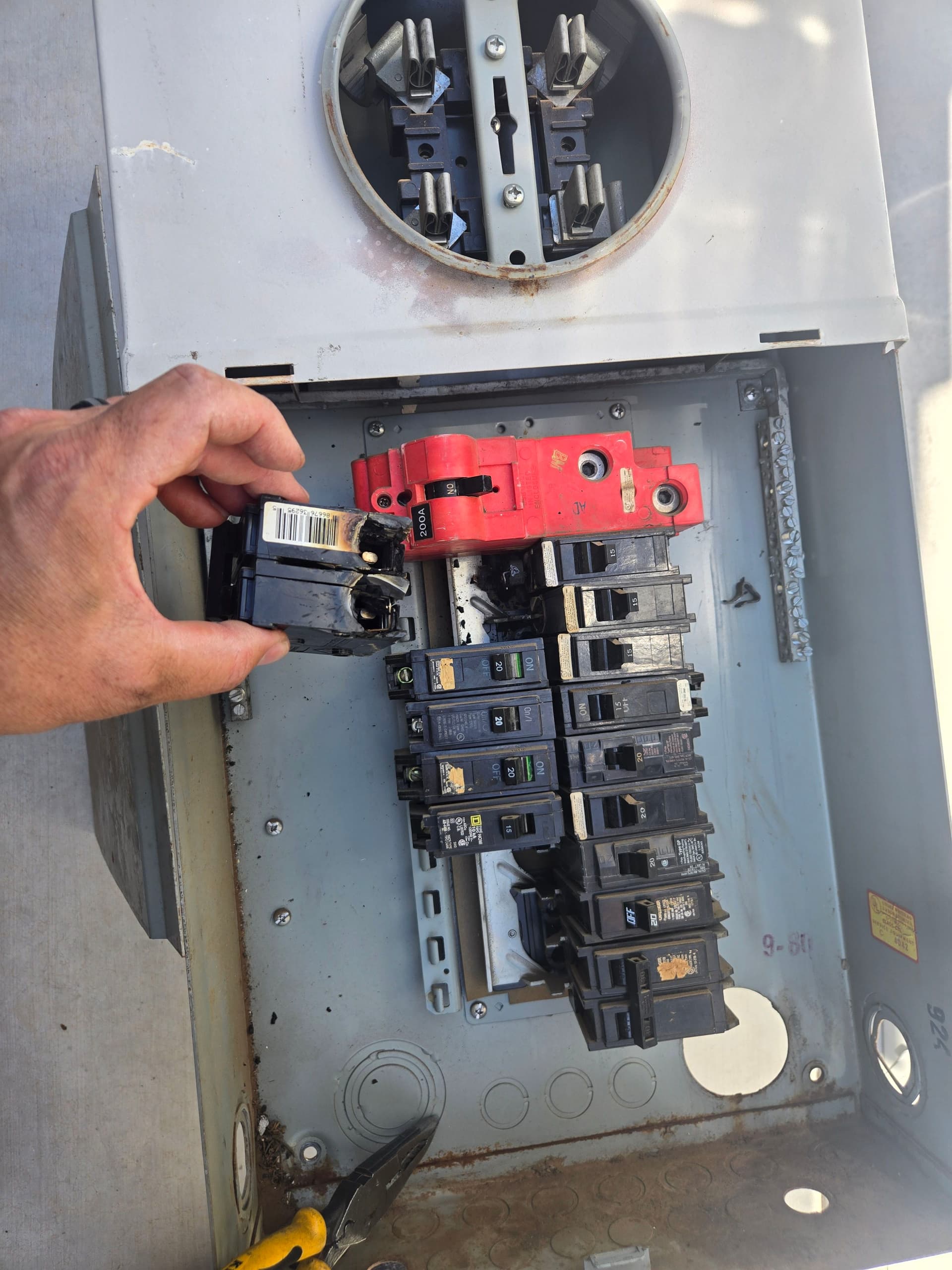
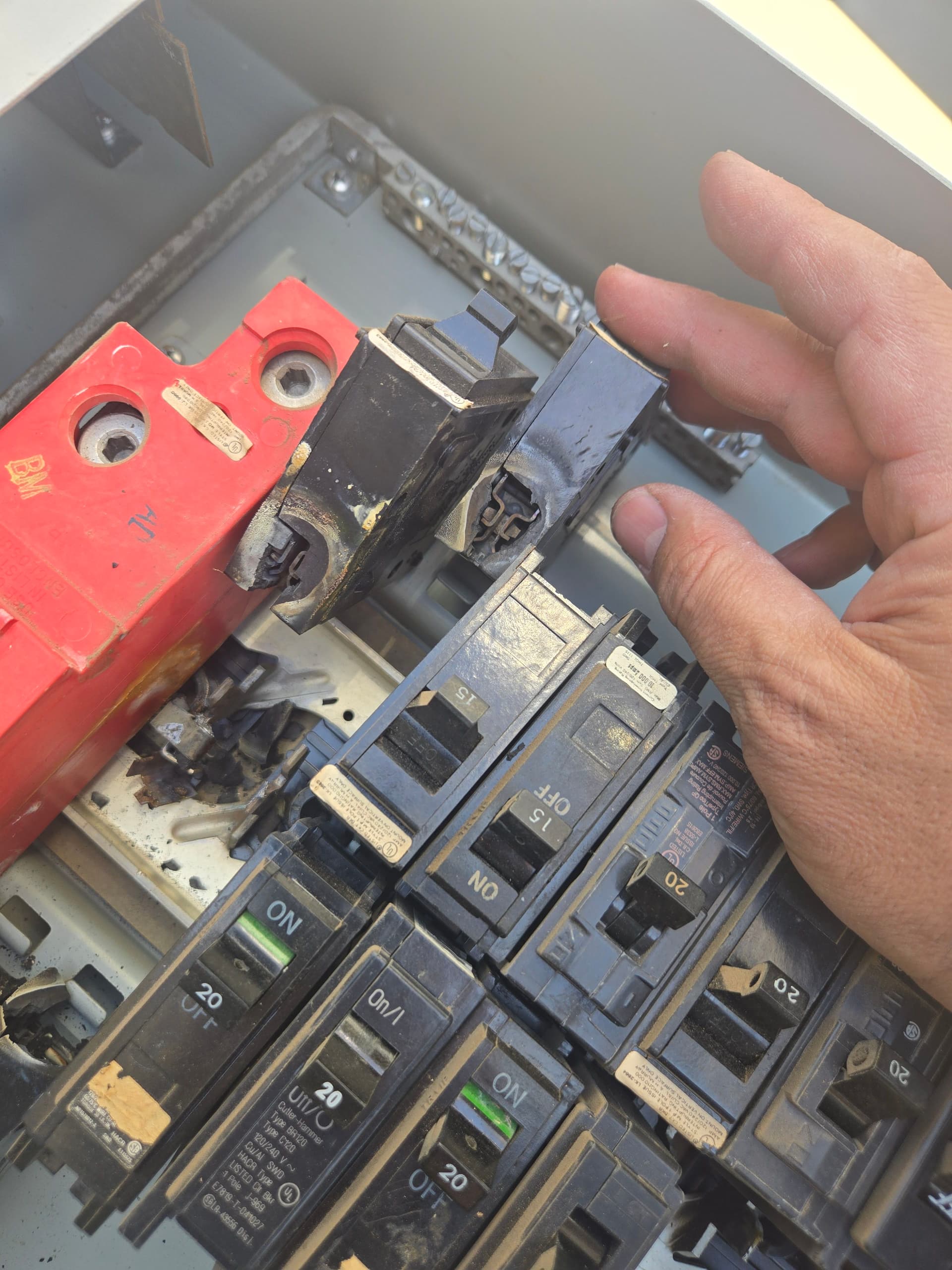
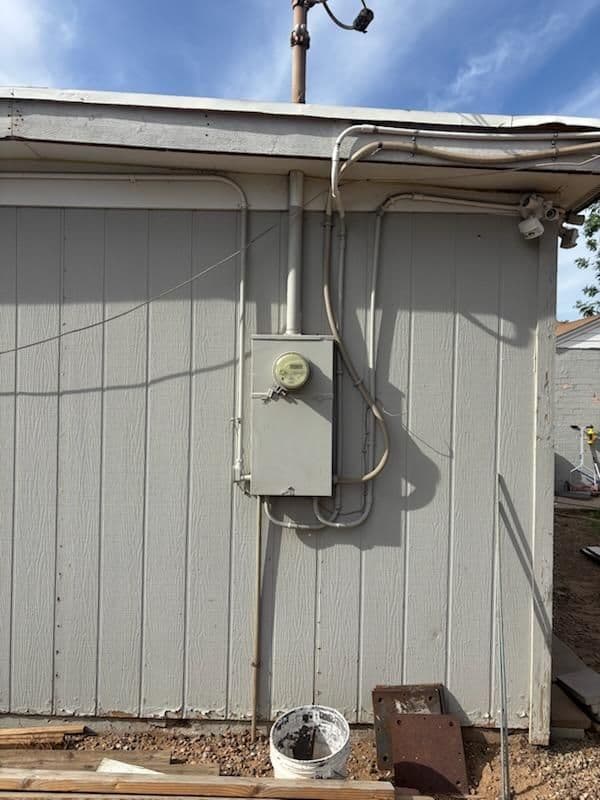
This one is a good reminder that a panel doesn't have to be tripping breakers or flickering lights to be a serious hazard. The homeowner in Glendale had no idea anything was wrong. From the outside, it looked like a normal, functioning panel. Open it up, though, and the story changes completely.
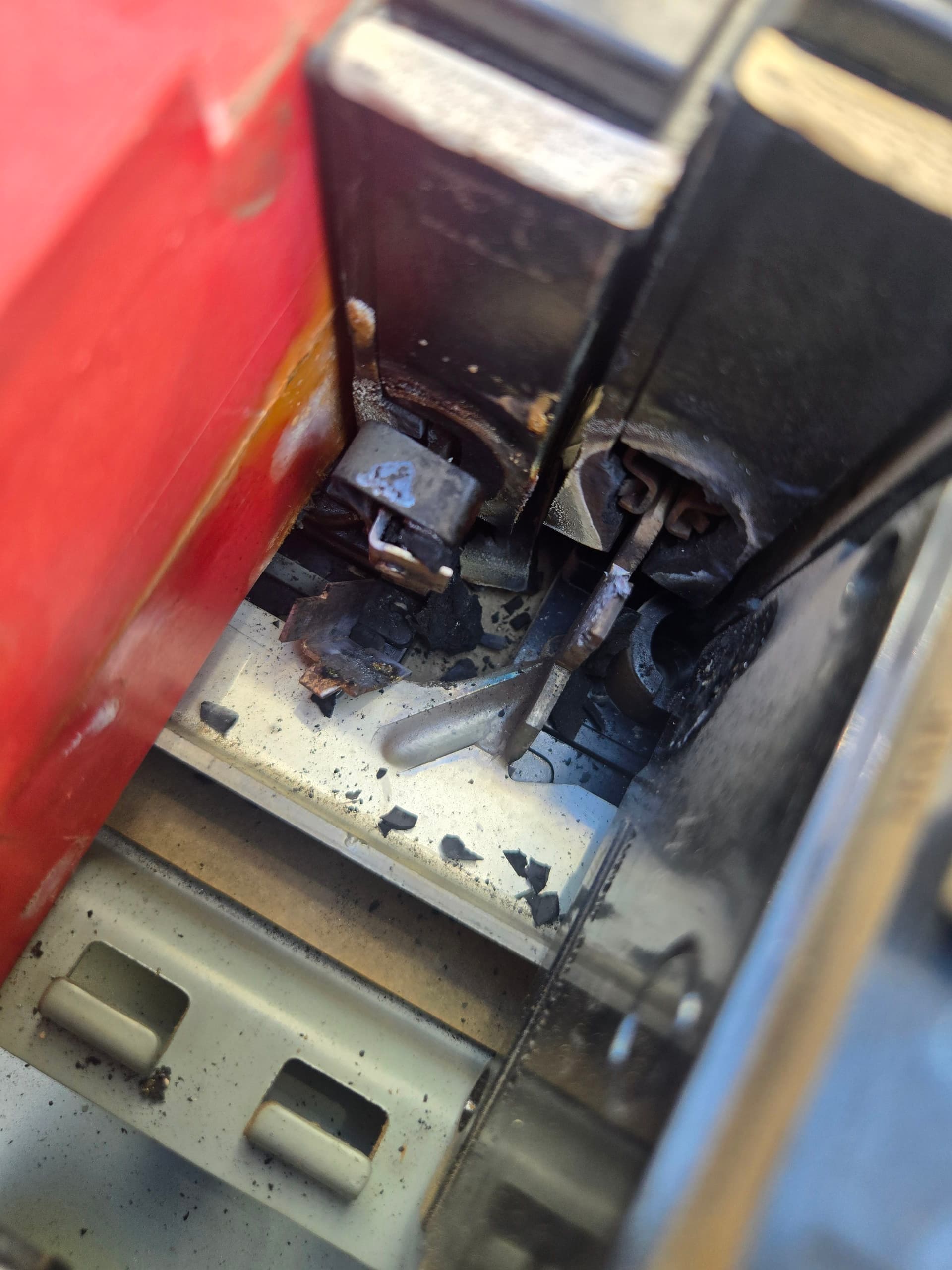
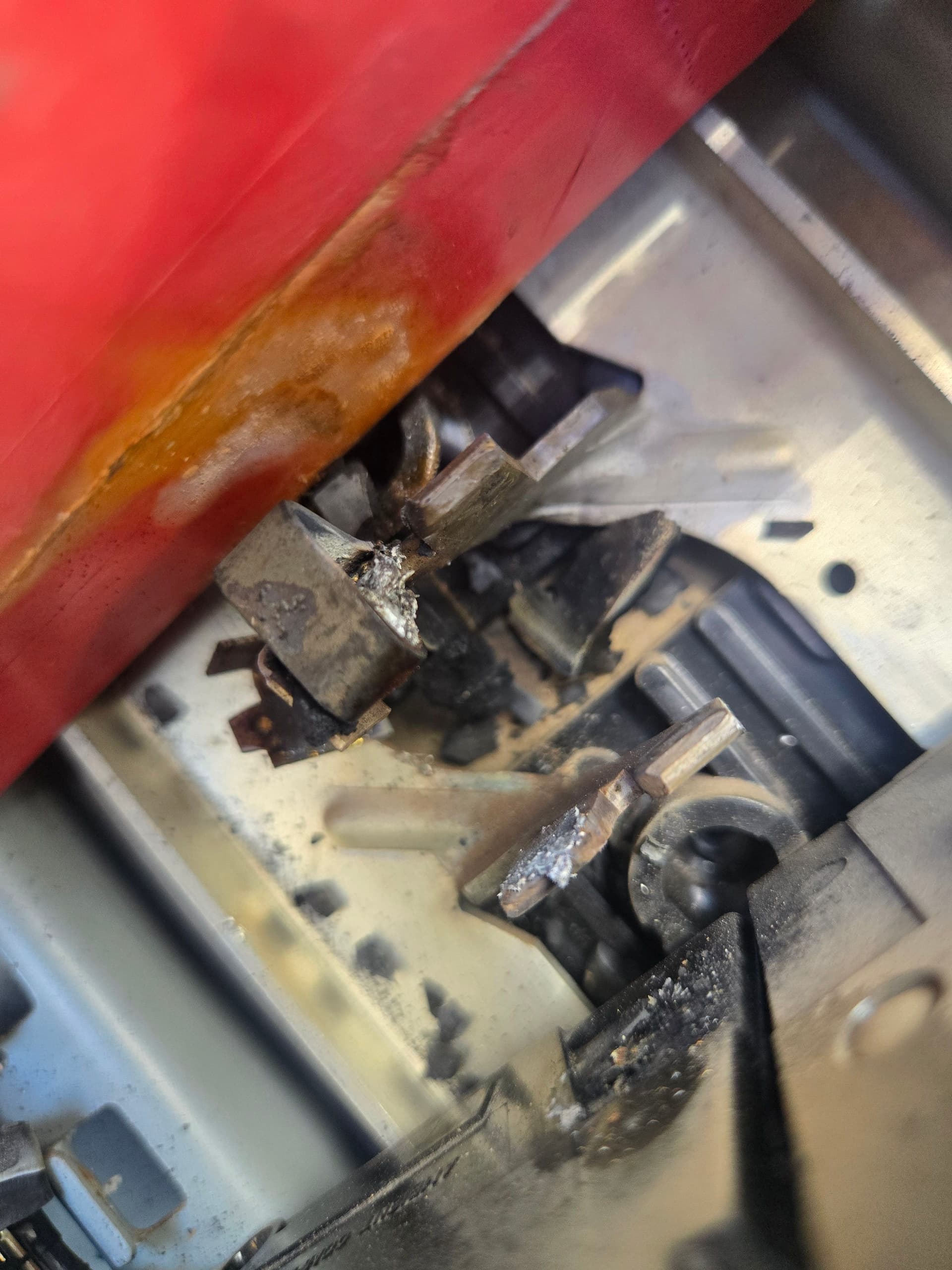
What we found inside was bad. Badly burnt breakers, active arcing damage, and debris scattered across the bus bar from where components had literally burned through. A breaker pulled from the top of the panel was charred and melted at the base - the plastic housing had broken down from heat. That kind of damage doesn't happen overnight. It builds up quietly over time, and the panel just keeps running until it can't anymore.
This is exactly why we push for inspections on older panels. If a panel is 25 or more years old, the internal components - breakers, bus connections, insulation - are aging too. They weren't designed to last forever. And when something like arcing starts, it generates heat that compounds the damage every single time current flows through it. The panel outside might look totally normal. Inside is a different story.
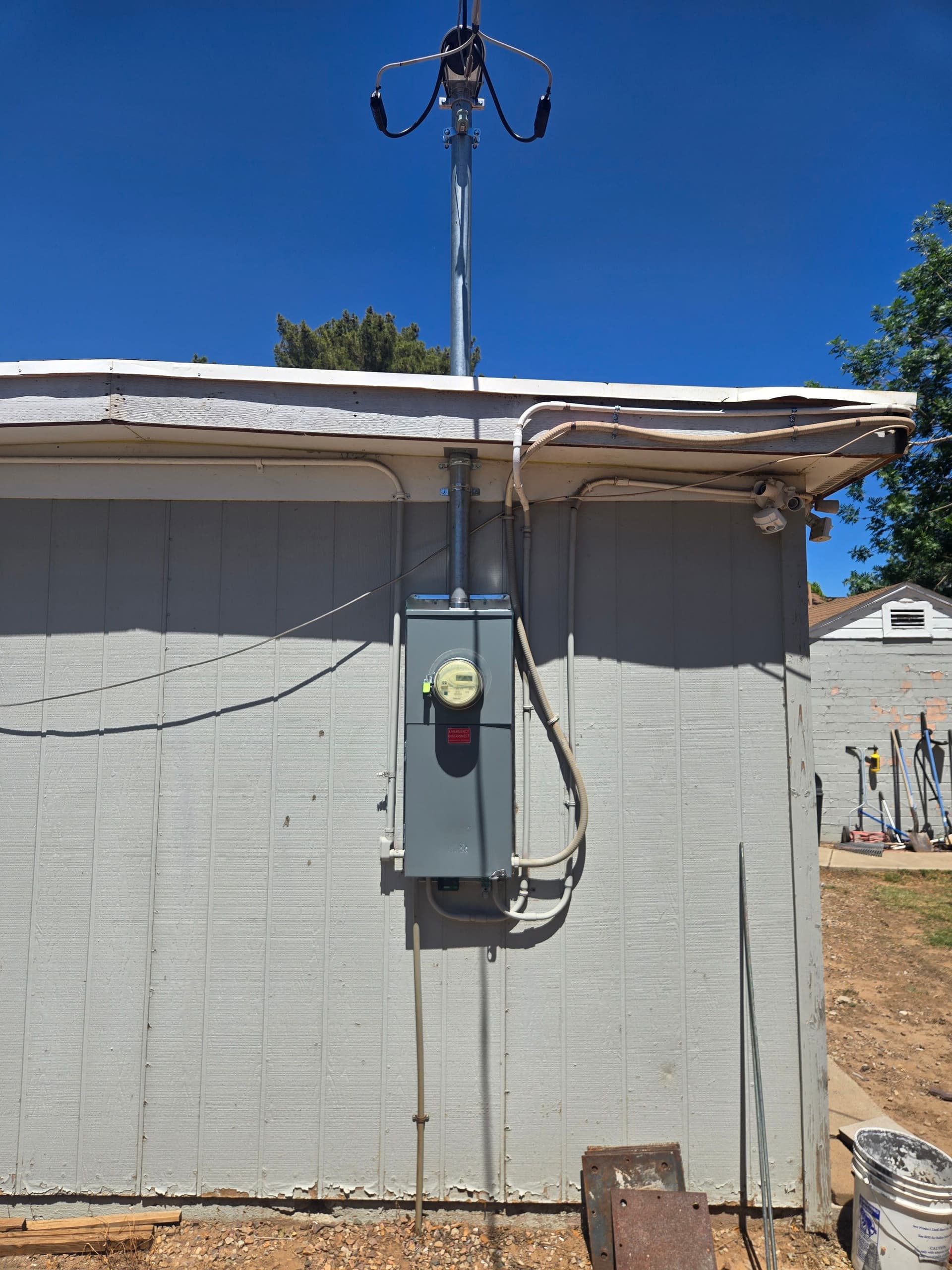
After documenting the damage, we moved forward with a full panel change out. The new installation is clean, properly rated, and built to handle the load safely. That's what a panel replacement is supposed to look like - not just swapping hardware, but actually fixing the underlying risk.
If you've got an older panel and haven't had it looked at, don't wait for a symptom to show up. By the time you notice something, the damage is usually already well underway. An inspection is a small thing that can catch a very big problem before it turns into something much worse.